Espresso Accessories for Home: What Do You Actually Need?
Editor’s Note: This is a research-based buying guide focused on useful espresso accessories rather than a hands-on product test.
Building an espresso setup does not mean buying every tool labeled “barista.” The useful accessories are the ones that make your workflow more measurable, repeatable, cleaner, or easier to control.
1. A Coffee Scale: The First Upgrade to Consider
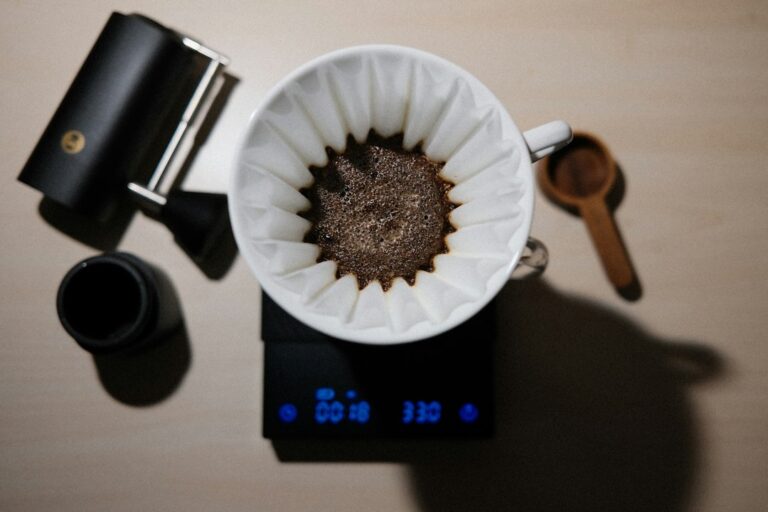
A scale lets you measure coffee dose and beverage output rather than relying on volume alone. A timer also helps you record what happened during a brew so you can repeat a recipe or diagnose a shot that tasted different.
A coffee-focused scale does not need to be complicated, but look for readable measurements, suitable resolution, a timer, and a size that actually fits beneath your machine. The TIMEMORE Basic 2.0 review covers one example of a scale designed specifically around coffee brewing. To compare it with a more guidance-focused option, see our TIMEMORE Basic 2.0 vs Fellow Tally Pro comparison.
2. A Tamper That Matches Your Basket
A tamper should match the size and style of your espresso basket. The goal is a stable puck preparation process rather than buying the most expensive handle or the heaviest accessory.
Before ordering, verify the basket diameter and whether the machine uses a pressurized or non-pressurized basket. Compatibility matters more than appearance.
3. A Milk Pitcher for Milk-Based Drinks
If you regularly make lattes or cappuccinos, a suitable milk pitcher is a practical purchase. Size should match the amount of milk you normally steam, while the spout should feel comfortable for the level of pouring control you want.
4. A Simple Cleaning Routine
Cleaning supplies are not exciting, but they protect the workflow you paid for. Your routine can include the manufacturer’s recommended cleaning cycle, a suitable brush, cloths, and the correct cleaning or descaling products specified by the machine maker.
5. A Dosing Funnel Can Reduce Mess
A dosing funnel can be useful when grounds tend to scatter during grinding or distribution. It is especially helpful in compact setups where keeping the work area clean matters.
6. A Knock Box or Grounds Container
A dedicated grounds container keeps used coffee pucks out of the sink and speeds up cleanup. Choose a size that fits your counter and is large enough for your normal number of shots.
7. Accessories That Are Optional, Not Essential
- Distribution tools: useful for some workflows but not mandatory for everyone.
- Bottomless portafilters: more useful for observing extraction than for simply making coffee.
- Specialty puck screens: can be workflow-specific rather than universal necessities.
- Fancy storage: convenient, but less important than keeping coffee fresh and measuring your brew.
What Should You Buy First?
| Accessory | Priority | Why |
|---|---|---|
| Coffee scale with timer | High | Makes dose and output measurable |
| Correct-size tamper | High | Supports consistent puck preparation |
| Milk pitcher | High for milk drinks | Makes steaming and pouring easier |
| Cleaning tools | High | Supports maintenance |
| Dosing funnel | Medium | Helps reduce mess |
| Knock box | Medium | Makes cleanup faster |
| Extra distribution tools | Optional | Depends on your workflow |
A Simple Home Setup
For a practical starting setup, prioritize a capable grinder, a scale with a timer, a correct-size tamper, basic cleaning supplies, and a milk pitcher when needed. Add specialized accessories only after you understand what part of your workflow is actually slowing you down.
For a compact espresso machine such as the Breville Bambino Plus, our Bambino Plus review and espresso machine buying guide provide more context on how the machine and accessories fit together.
Sources
- TIMEMORE — Basic 2.0 product page
- Breville U.S. — product and support information referenced in related CupCriteria guides